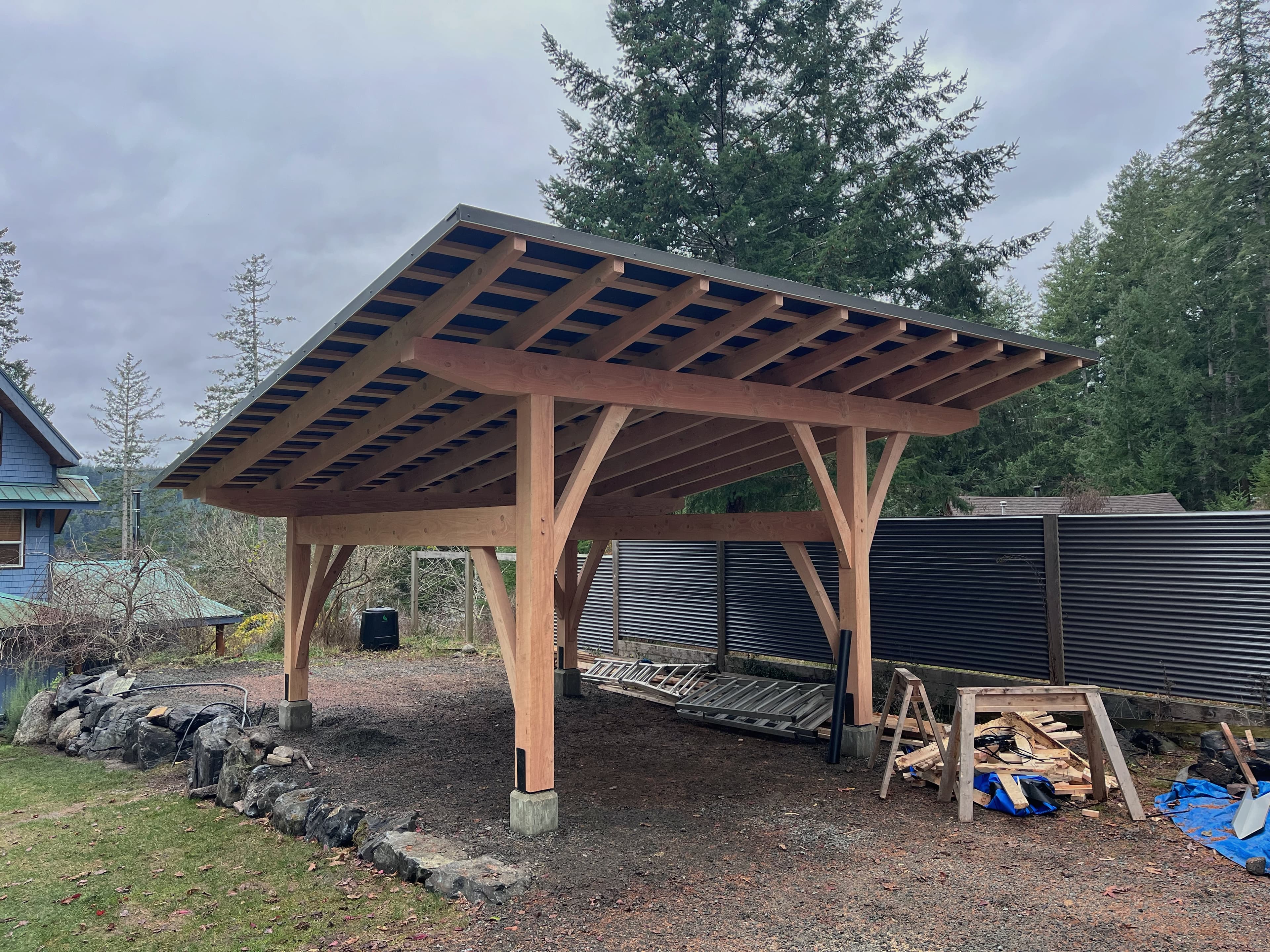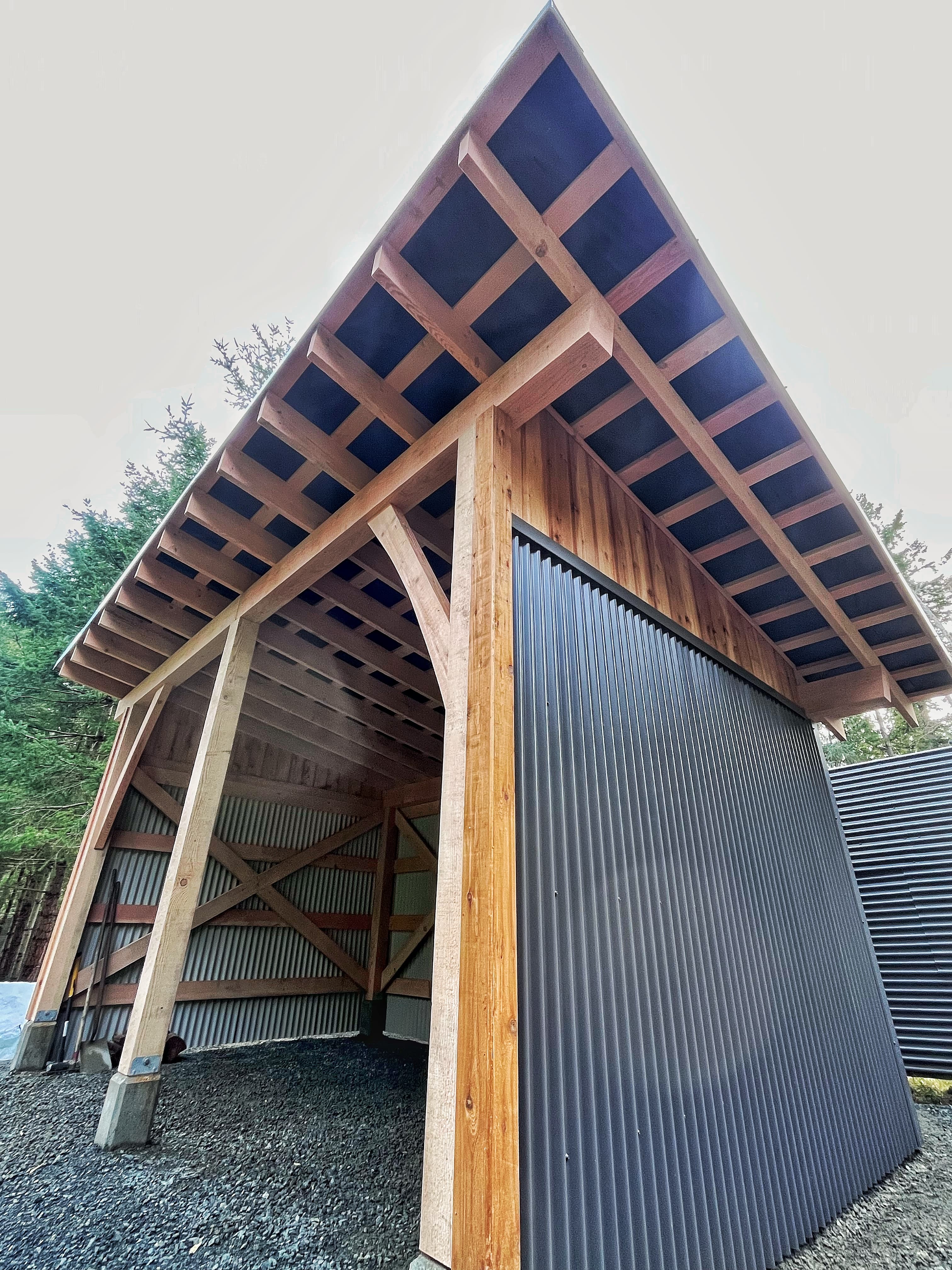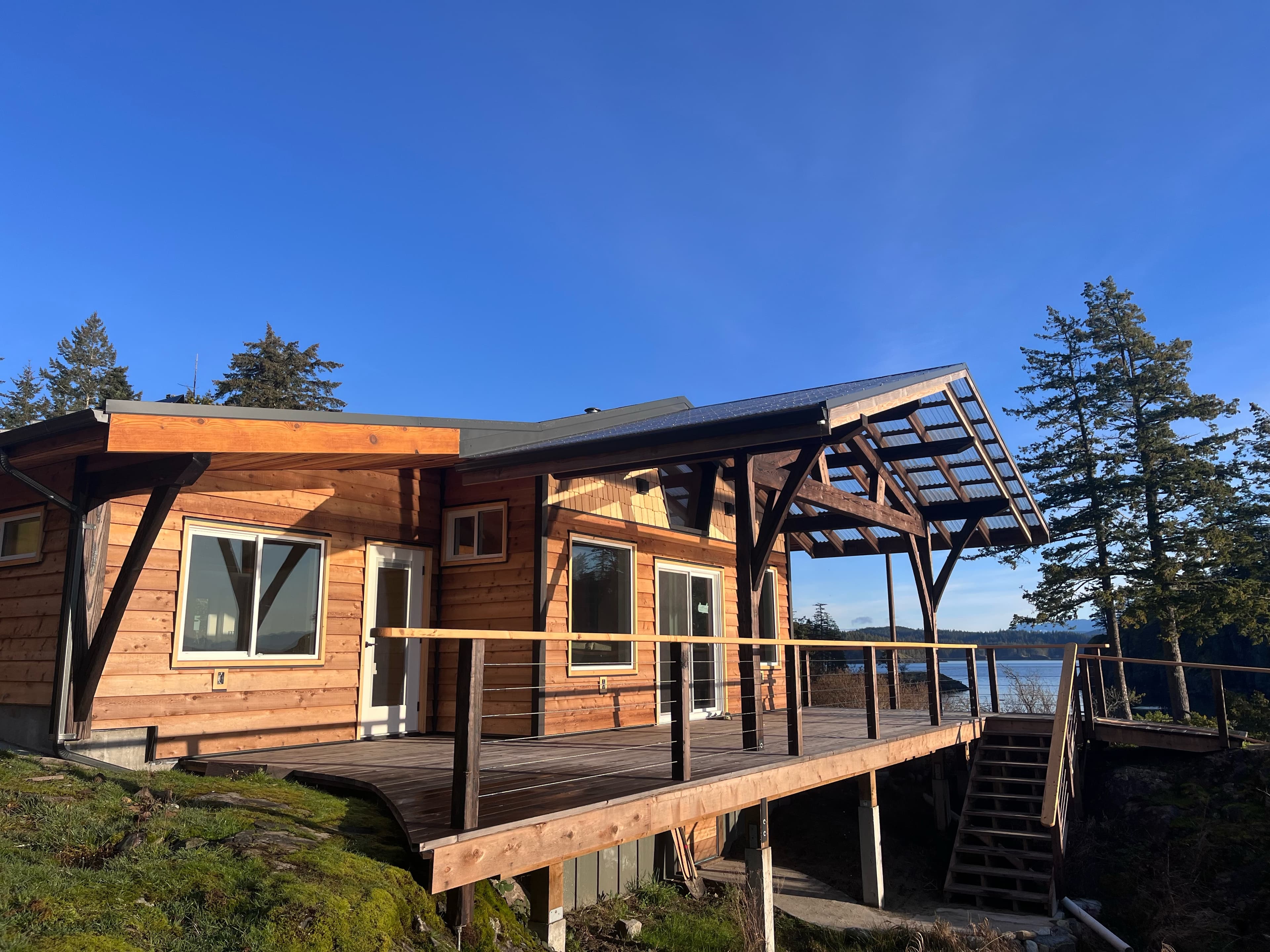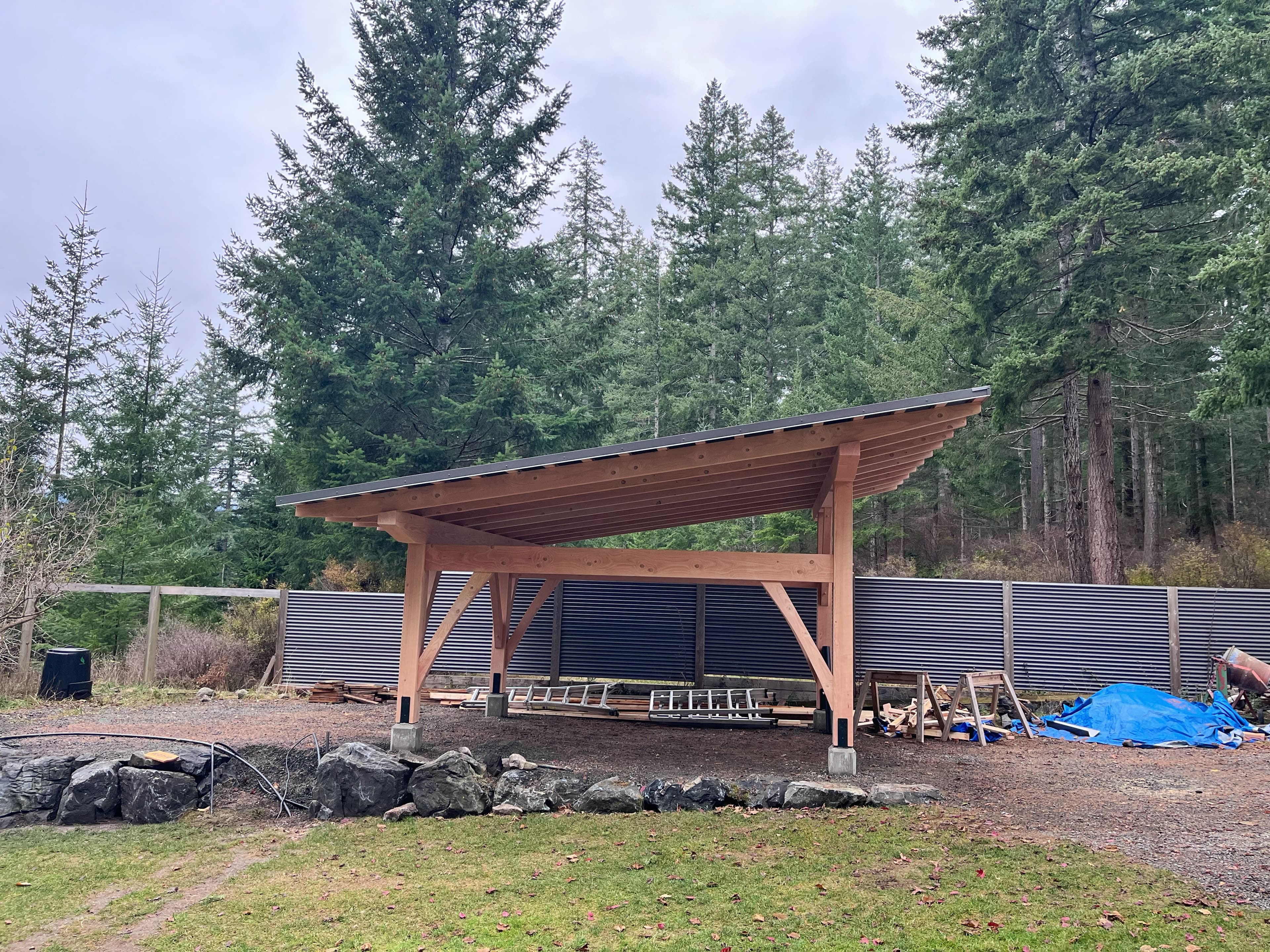
Ferries, timber deliveries, wells, septic and permits: what it takes to build a custom home on Quadra Island, and how to plan around it.
Quadra Island sits across Discovery Passage from Campbell River, a short BC Ferries crossing from the Campbell River terminal to Quathiaski Cove. That short crossing shapes almost everything about building here. Materials, equipment and many of the trades come over the water, and a project on Quadra runs smoothly when the schedule respects that.
None of this makes building on the island unusually difficult. It makes it different, and the differences are worth understanding before the first drawing.
Getting materials across
Most building materials reach the island by ferry, on trucks that travel on scheduled sailings like everyone else. For ordinary loads (lumber packages, windows, drywall, fixtures) this is routine, but it adds time and coordination, particularly in summer when sailings are busier.
Timber frames raise a particular question: length. Long ridge beams and plates may need extended trailers or travel as oversize loads, which can bring their own requirements for booking and sailings. These are things to confirm with BC Ferries and the carrier well ahead of time, not the week of delivery. Sometimes the right answer is to design a scarf joint into a long member so that it can travel in two pieces. Often it is simply a matter of booking early.
Some properties on Quadra and the smaller islands nearby have no road access at all. For those sites, materials and machines typically move by barge or landing craft, which brings tides, weather and a suitable landing spot into the plan. A water-access build is entirely possible; it just has to be scheduled around the sea.
- Identify the longest and heaviest pieces early, and decide how they will travel.
- Ask the supplier and carrier about ferry requirements for long or oversize loads.
- Build ferry time into every delivery window, and allow for full or cancelled sailings.
- For water-access sites, settle the landing point and tidal constraints before the design is finalized.
Trades, suppliers and the island
Quadra has its own community of tradespeople, and Campbell River, across the water, has a wider base of suppliers, equipment rental and specialist trades. A typical project draws on both. Island trades know the roads, the soils and the weather; off-island trades and suppliers fill in what the island does not have. Scheduling with ferry travel in mind, and recognizing that good local trades are often booked well ahead, keeps a job moving.
Water, septic and site services
Most rural lots on Quadra are not connected to community water or sewer. Water usually comes from a private well, and wastewater is handled by an onsite septic system.
For a well, the questions are quantity and quality. If a lot already has a well, it is worth testing its flow and water quality before committing to a design. If it does not, drilling is an early step, because the result can affect where the house goes and what treatment the water needs. Some owners add rainwater collection, which suits the coast’s wet winters but needs storage to carry through drier summers.
Onsite sewerage systems in British Columbia are governed by the provincial Sewerage System Regulation. A system must be designed and installed by an authorized person (a Registered Onsite Wastewater Practitioner or a qualified professional) and filed with the regional health authority, which for Quadra is Island Health. Soil depth, slope and rock all influence the type of system and where it can go, so the septic field, the well and the house are best located together, early, rather than one at a time.
Power, driveway access and fire safety deserve early attention as well. The distance from the road to the building site affects how electrical service is brought in, and a driveway has to work for concrete trucks and delivery vehicles, not just cars.
Permits through the regional district
Quadra Island is part of the Strathcona Regional District, within Electoral Area C. It is not part of the Islands Trust, which governs the Gulf Islands and other islands in the Salish Sea. Building permits, zoning and land-use questions on Quadra go through the regional district.
Before buying land or starting design, it is worth checking the zoning for the lot: permitted uses, setbacks, height limits and any development permit areas, such as those that can apply near shorelines or on steep slopes. Requirements change, so the current bylaws and the regional district’s building department are the authority, not general advice like this. A permit application for a timber frame home will usually include structural engineering for the frame and foundations alongside the standard drawings, and septic and water supply documentation may also be requested. Confirm the current list with the regional district before you apply.
Building with the seasons
The coast here has wet, mild winters and comparatively dry summers. Rain, from autumn well into spring, is the main weather fact to plan around.
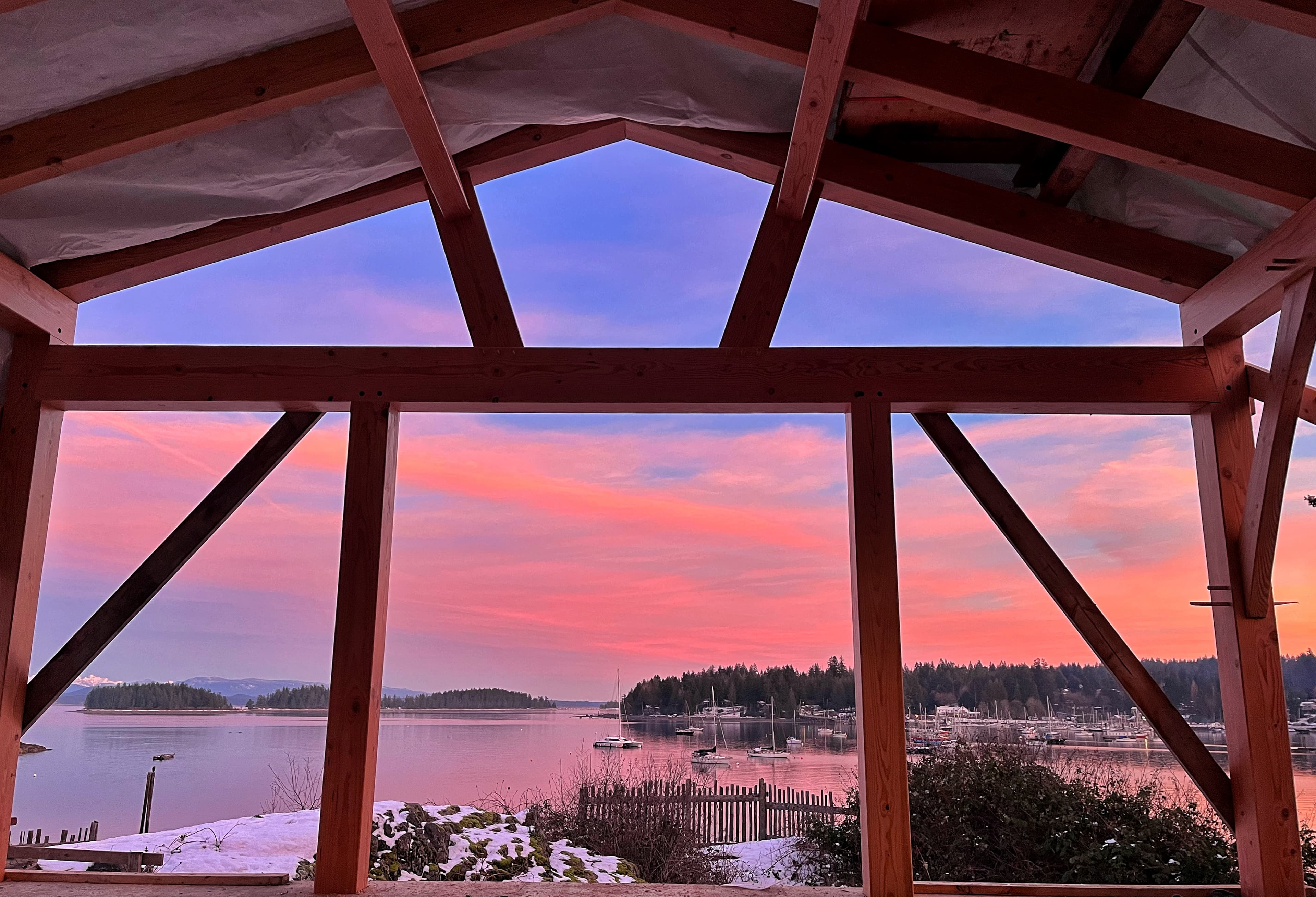
Ideally, foundations and the frame raising happen in the drier months, and the building is closed in (roofed, wrapped and dried-in) before the autumn rains settle. Timber that sits out in the wet for weeks, or a frame left open through a rainy season, picks up moisture and staining that has to be dealt with later. Where the schedule does not line up, timbers can be stored under cover and the frame tarped between stages. Interior work then carries on through the winter in a dry building.
The rhythm of a Quadra project, then, is set partly by the ferry and partly by the weather. Planning for both from the beginning is most of the work of building well here.